
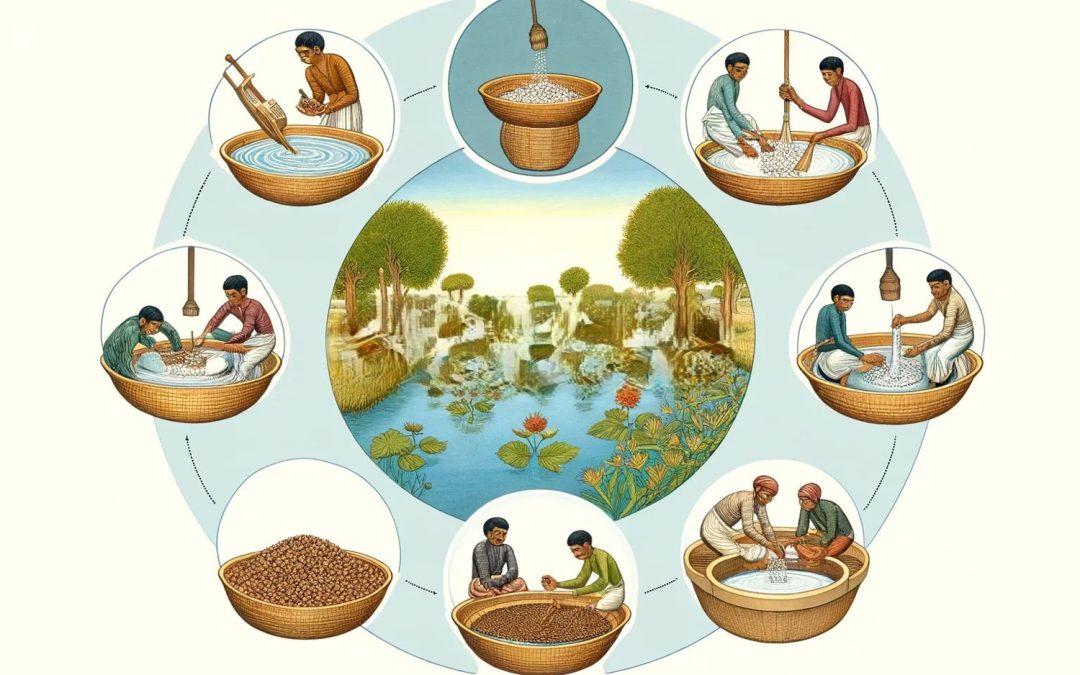
Makhana Manufacturing Process
The manufacturing process of makhana involves several carefully managed stages to maintain product quality, hygiene, freshness, and consistency. The process starts from the cultivation of lotus plants and continues through harvesting, roasting, grading, and packaging before reaching wholesalers and consumers.
The first stage is the cultivation and harvesting of makhana seeds from lotus ponds, mainly located in Bihar. Farmers collect mature seeds from water bodies using traditional farming techniques. These seeds are then cleaned and dried naturally before further processing.
After drying, the seeds undergo a roasting process at controlled temperatures. Roasting is one of the most important steps because it helps prepare the seeds for popping. Skilled workers use traditional and modern methods to roast the seeds properly while maintaining product quality.
Once roasted, the seeds are popped manually or mechanically to produce the white puffed makhana that consumers recognize. The popping process requires expertise because temperature and timing directly affect the final quality, size, and texture of the makhana.
After popping, the makhana is sorted and graded according to size, whiteness, texture, and overall appearance. Different grades such as Classic, Silver, Gold, Kohinoor, and Diamond are separated carefully to fulfill various market demands.
The next stage involves quality inspection and cleaning. Advanced sorting machines and manual inspections help remove impurities and damaged products. Maintaining hygiene during processing is extremely important to ensure food safety and customer satisfaction.
Finally, the makhana is packed using hygienic packaging materials to preserve freshness and extend shelf life. Bulk packaging, retail packaging, and export-quality packaging options are prepared according to customer requirements.
Modern manufacturing facilities are now adopting advanced machinery and automated grading systems to improve efficiency and product consistency. Proper manufacturing and quality control help maintain the premium standards expected by domestic and international buyers.